
How to Find Therapists for Remote Workers

Stress at work is a part of life, whether you’re a remote worker or not. You’ve undoubtedly heard plenty of advice on how to manage it. Schedule breaks, take walks in nature, meditate, declutter your space, make sure to sleep enough, eat well, and get some exercise.
Sometimes, however, the stress can be overwhelming enough to warrant professional help from a therapist. Not to fear. Help is out there. That’s why today, we’re diving into the best ways to find therapists for remote workers.
Mental Health Issues Facing Remote Workers by the Numbers

Working from home has long been touted as a significant booster of mental health and well-being. There’s more freedom to spend time with family, improved sleep habits (thanks, zero commutes!), and improved productivity.
Perhaps that’s why the negative impacts of working from home with little social contact can seem so counterintuitive. A large study published in Science, drawing on nearly 590,000 American workers surveyed between 2011 and 2024, found remote work substantially increases isolation and worsens mental well-being, an effect roughly twice as strong for people who live alone. Separately, 55% of remote employees say it’s hard to feel connected to their coworkers, and workplace loneliness in general is estimated to cost employers $154 billion a year in lost productivity and turnover.
Fortunately, one particularly helpful group of professionals has gone remote along with the rest of us: therapists.
Virtual Therapy Gives Remote Workers a Safe, Accessible Option

Therapy has been taking place remotely for over 20 years now, well before remote work itself went mainstream, and its popularity has only kept climbing since.
For many who already have established care with a mental health provider, that means your existing therapist may be among those who offer remote sessions. Even countries like Germany, which previously had regulations in place to limit, or even prohibit, therapists from giving remote sessions, have changed their tune and now allow remote therapy as well.
But what about those seeking help for the first time to combat anxiety, burnout, depression, or any of the other symptoms remote workers commonly deal with? Or perhaps you’re a digital nomad, and you find yourself in a country or culture where mental health services aren’t as readily accessible as others.
There are many reasons why finding therapists for remote workers may be challenging. Fortunately, there are resources available if you know where to look.
The Rise of Online Therapy Apps
Have you ever heard the expression ‘there’s an app for that’? For just about every problem you can dream up, an app likely exists to help you solve it.
And that goes for therapy as well.
With the prevalence of smartphones and younger generations who prefer to communicate via text and video chat, therapy-by-app is just a natural progression of long-standing trends.
The good news is that online therapy has proven to be highly effective. Online therapy is more appealing to those who might be reluctant to sit on a therapist’s couch face-to-face. It also makes it easier for those who live in rural areas.
As it turns out, what’s good for the goose is good for the gander. Many therapists now run their practice through online therapy apps, which means the option to see someone remotely is usually there even if you’d rather not sit in a waiting room.
The Best Online Therapy Platforms for Remote Workers

Dozens of online therapy applications have popped up over the past few years. Still, there are a few that currently reign supreme, especially among remote workers.
While they all offer affordable pricing and appealing packages, it may not be as difficult as you think to decide which one to use. Read on to learn what sets these three platforms apart and why you may easily be able to choose one over the other, depending on your preferences.
1. Talkspace
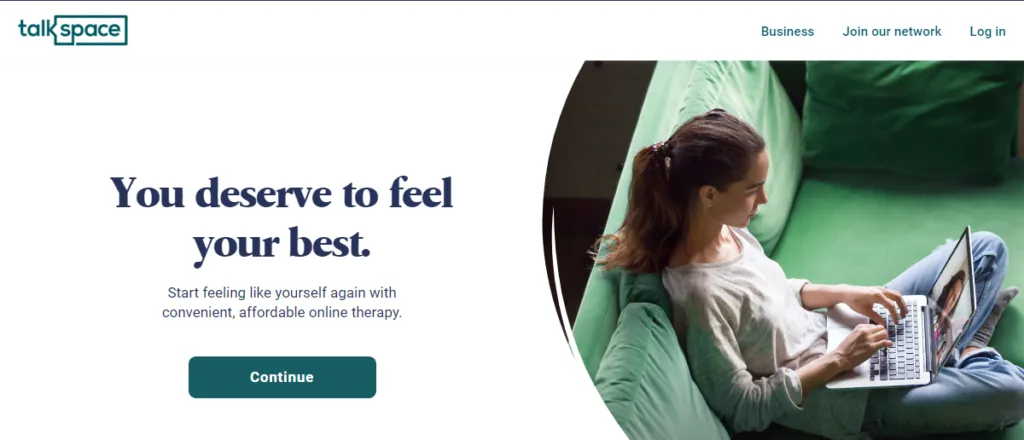
Talkspace was designed with asynchronous communication via text, video, and audio messaging in mind.
That means that while live sessions are available (at an increased price point), most of the therapy that takes place on Talkspace isn’t live. Patients send their message, and their therapist will respond within a set period.
Pros:
- Fast customer service
- A human reviews your application and matches you to a therapist.
- Regular feedback opportunities
- Guaranteed response times from the therapist
Cons:
- Wait times for getting matched to a therapist.
- You’re required to sign up for an entire month of services, and you’ll be billed for the whole month if you cancel early.
- Geared primarily towards text, video, and audio messaging rather than live messaging.
2. Online-Therapy.com
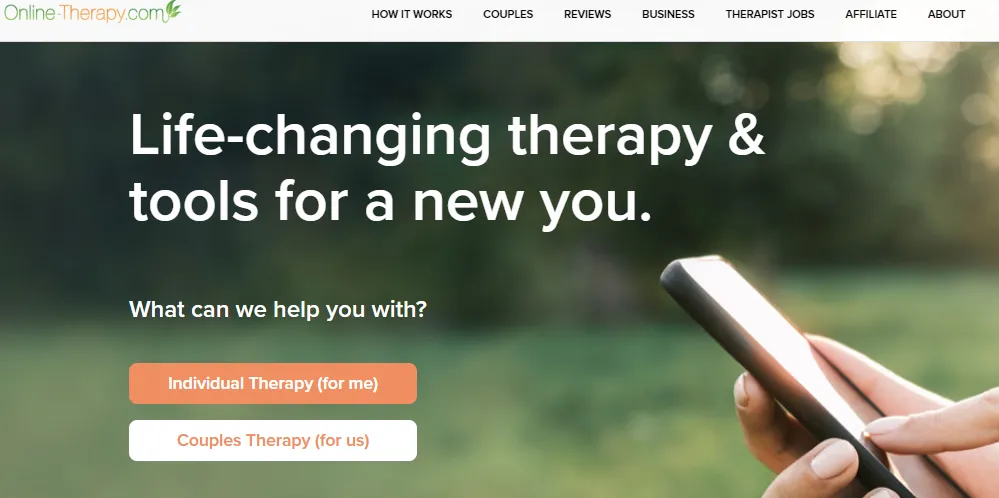
“We’re not like other online therapy sites” - that’s the tagline for Online-Therapy.com, and their wide array of services certainly backs up that statement.
Online-Therapy.com is an end-to-end solution for Cognitive Behavioral Therapy (CBT) that incorporates live sessions, asynchronous messaging, as well as worksheets, reading material, activities, journaling, and more.
It’s a true toolbox for mental health and well-being.
Pros:
- Immersive counseling experience based on cognitive behavioral therapy.
- Many resources available on top of live sessions and messages with your therapist.
- Accessible on any device, regardless of where you are in the world.
Cons:
- Live sessions are not included in the basic plan.
- Live sessions are set at 30 minutes each, so shorter than other platforms.
3. BetterHelp
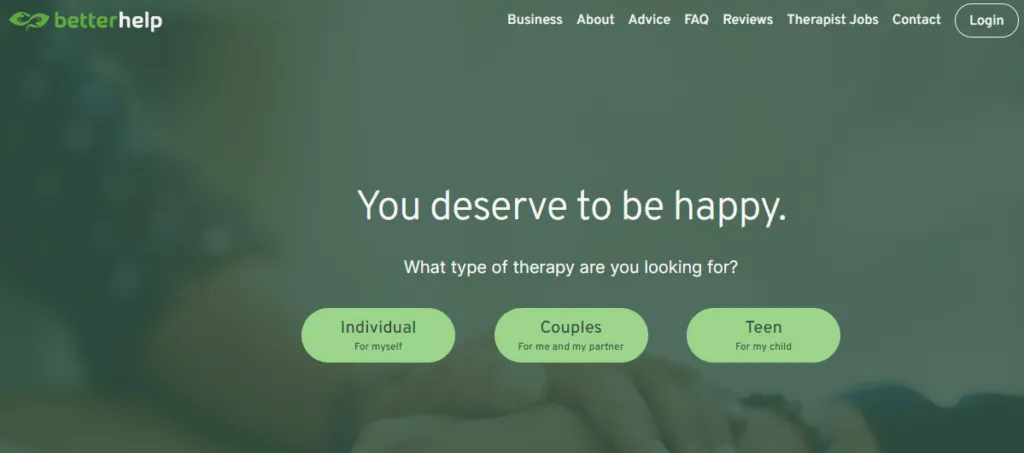
There are professionals and patients alike who swear by live sessions, and BetterHelp was designed for them. Rather than asynchronous messaging as a standalone delivery method, BetterHelp focuses on live sessions, with messaging serving as a communication mode between live sessions.
Even their basic packages include weekly live sessions, so you won’t need to pay more to benefit from a live call or video chat with your therapist.
Pros:
- Changing therapists is easy and encouraged if you find you’re not a good fit.
- Flexible communication with your therapist. You use the method(s) that work best for you.
- Weekly contracts are available.
Cons:
- You’re matched to a therapist without human intervention. Your results are based on a questionnaire.
- Some users reported spotty response times from therapists.
Specialized Tele-Mental Health Services Worth Knowing About
Regain
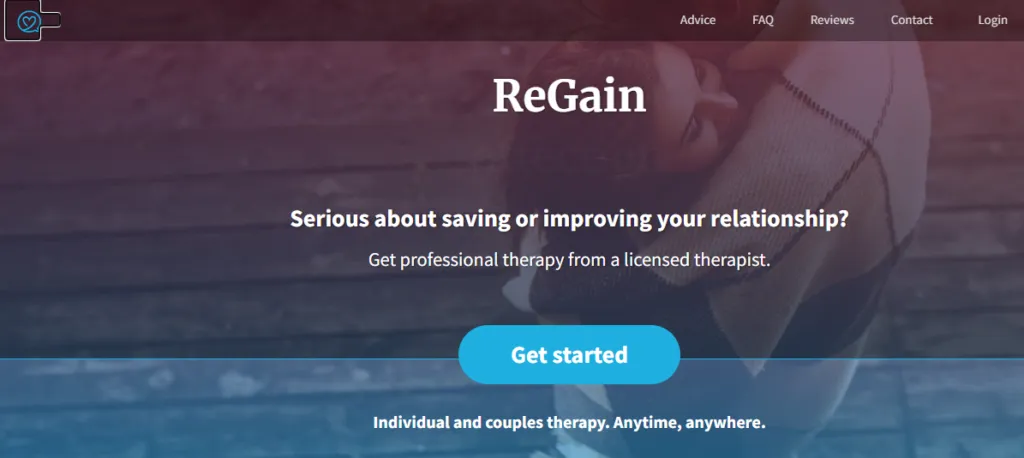
Couples face their own unique set of challenges while working remotely. Regain is dedicated exclusively to relationship counseling, making it a fantastic option for keeping your relationships healthy and thriving.
Their experienced specialists in couple’s therapy can help with everything from infidelity to the unique stresses facing couples who work remotely.
Pros:
- Video sessions are encouraged
- Pricing is inclusive of two participants
- Therapists are highly specialized in therapy for couples
- Private sessions are available
Cons:
- The therapist match process is entirely automated.
- There is no live customer service.
- A monthly commitment is required to start. There is no free trial.
7 Cups
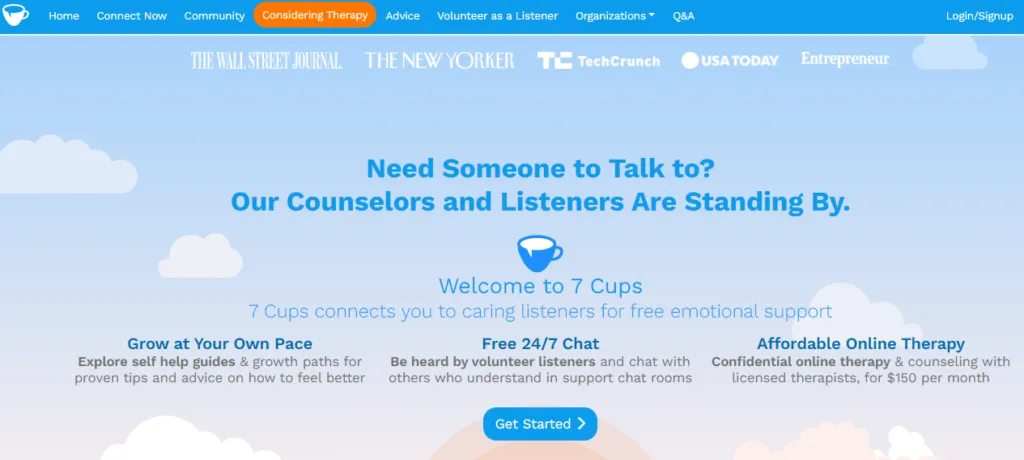
7 Cups is a bit of an outlier in this list as it’s not truly an online therapy platform. It’s more accurately described as a peer support network and is excellent for those looking for emotional support.
There are many reasons why this option might be more appealing to you. If, for example, you’re concerned about the cost associated with traditional or remote therapy, 7 Cups may be an appropriate alternative*.
Perhaps you don’t want to see a therapist at all; you’re just looking to connect with another human being to help you process your experiences.
7 Cups gives you a convenient, anonymous way to do just that.
*If the challenges you’re facing are severe or debilitating, please consider speaking to a licensed professional. 7 Cups also has licensed therapists available if needed.
LGBTQ+ Focused Matching Through BetterHelp
Members of the LGBTQ+ community deal with mental health issues disproportionately, regardless of whether they work from home or in-office. Pride Counseling used to be a separate platform for this, but it’s since been folded into BetterHelp, which now handles LGBTQ+-specific therapist matching directly. If that’s what you’re looking for, sign up through BetterHelp and note the preference during onboarding rather than searching for the old Pride Counseling site.
Mental Health Care Is Vital for Remote Workers
Regardless of which platform you choose, taking care of your mental health as a remote worker is vital, especially if you’re new to working from home.
Remember, there is always help available, and you’re not alone if working from home has you feeling isolated and anxious. Sometimes you can combat these feelings with activities that promote a sense of well-being, like meditation or physical activity.
But nothing beats the benefits of merely talking your concerns over with another human being. For that, we can be grateful for the many options for finding therapists for remote workers these days from the comfort of our own homes.
Check out our article how to keep a work-life balance when working remotely for more ways to manage stress before it gets to that point.
One note for a different reader: if you arrived here as a therapist rather than as someone looking for one, the guide to whether therapists can work from home is the one you want. It covers the teletherapy roles that hire, what the platforms actually pay, and the licensing rules for seeing clients in other states.