
Can Vets Work From Home? What the Telemedicine Rules Allow
Some of it, and less than in any other profession in this series.
The problem is the first visit. In most states a vet can’t take on a new patient over video, because the relationship that allows diagnosis and prescribing has to start with an examination in the same room as the animal. The federal rule for certain drugs says the same thing everywhere. And unlike nurses, psychologists or physical therapists, vets have no interstate compact, so every remote patient needs a licence in the state where the animal lives.
That leaves two groups of vets who genuinely work from home: generalists doing advice, triage and follow-ups, and specialists reading images and slides for clinics they never visit. The second group earns the most remote pay in veterinary medicine, and it takes a residency to join.
Where this applies. The licensing and pay sections are United States specific. The UK went a different way in 2023, which is covered briefly further down.
Which veterinary work moves online, and which stays in the clinic
General advice and triage. Whether a limping dog needs the emergency clinic tonight or can wait until Monday, what a new puppy should eat, whether a symptom is worth worrying about. None of this is a diagnosis, so it doesn’t need a formal relationship with the animal. Georgia’s 2025 law now defines teleadvice, teletriage and telemedicine separately, which is a useful map of the line even outside Georgia.
Follow-ups with existing patients. Once a vet has examined an animal in person, video check-ins are allowed almost everywhere. The Food and Drug Administration says so directly: “Once a VCPR is established, telemedicine can be a useful tool for maintaining the VCPR.”
Reading images and samples. Radiographs, ultrasound and pathology travel as files, and specialist consulting for clinics without their own specialists is a genuine work-from-home field.
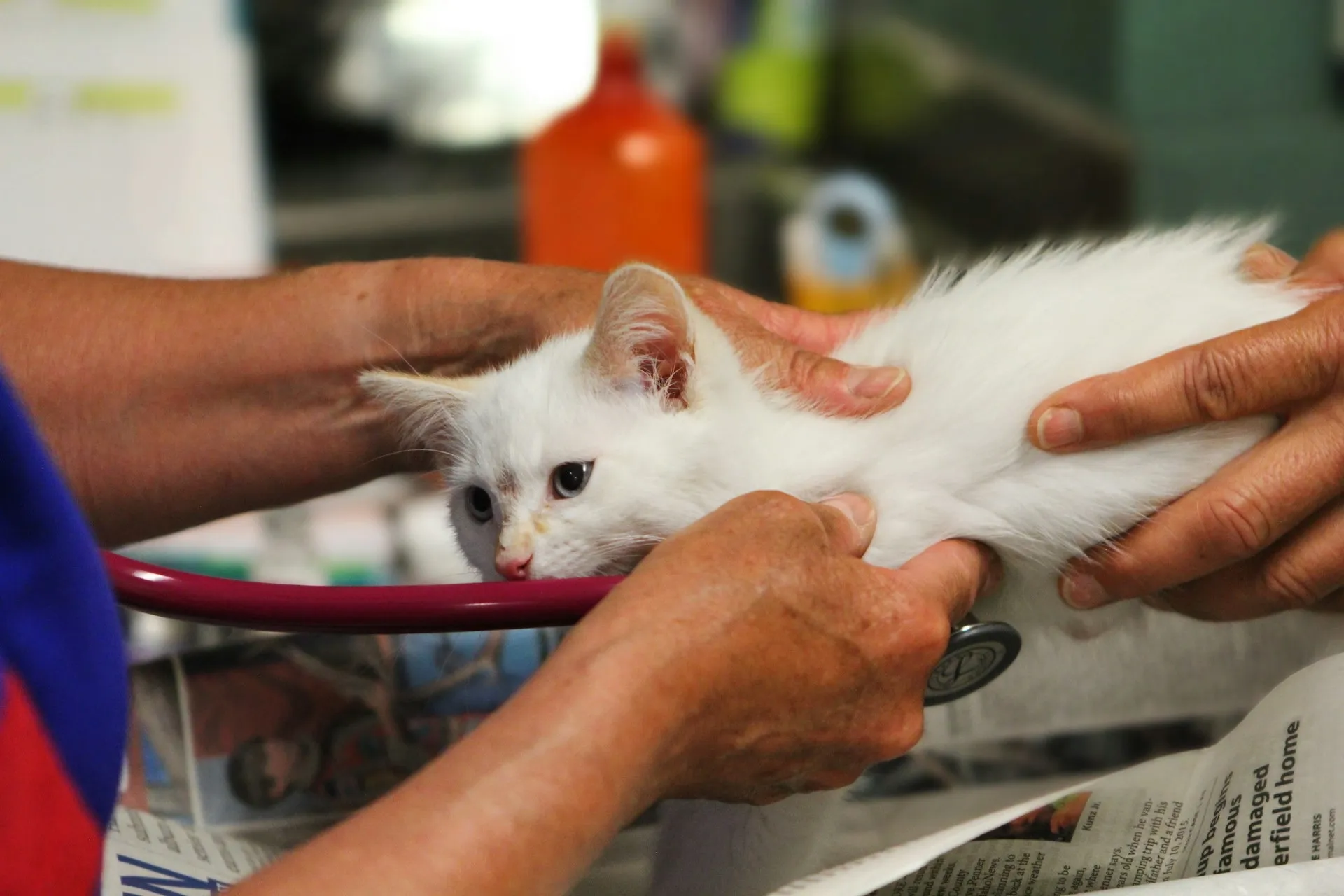
Everything with hands in it stays. Exams, vaccinations, surgery, dentistry, euthanasia, and in most states the first diagnosis. Practices themselves haven’t moved much: in the American Veterinary Medical Association’s 2025 practice report, telehealth was the least-used of the technologies surveyed, at 29.2% of practices.
Why a vet can’t take on a new patient over video in most states
Two locks, and both have to open.
The federal lock. The veterinarian-client-patient relationship, or VCPR, is the legal basis for diagnosing and prescribing. The FDA’s position is that “a valid VCPR cannot be established solely through telemedicine,” and a federal VCPR is required for extra-label drug use and for Veterinary Feed Directive drugs used in livestock. That applies in every state, including the ones that allow a virtual first visit. It matters most to farm and food-animal vets, and it’s why state telehealth laws usually exclude livestock.
The state lock. Each state defines its own VCPR for everything else, and most still require an in-person examination or a visit to the premises before telemedicine can start. On top of that, practising on an animal means holding a licence in the state where the animal is. Veterinarians must be licensed state by state, and there is no multistate licence. The American Association of Veterinary State Boards offers a licence transfer service called VAULT, which makes applying to another state easier and still leaves you holding one licence per state.
A few states have small side doors. Vermont’s out-of-state telehealth registration, for example, allows care to no more than 10 patients over 120 consecutive days. Useful at the margins, and nowhere near a caseload.
Compare that with the Nurse Licensure Compact, where one licence covers most of the country. Of all the professions in this series, vets have the least portable licence.
Which states allow a virtual first visit?
About ten, as of September 2026. No neutral body publishes a count, so this table is compiled from the state laws and boards themselves. Several older state lists still ranking in search describe the rules as they stood in 2020, when California banned it outright.
| State | Since | Main limits |
|---|---|---|
| Arizona | 2023 | Arizona licence. From 12 September 2026, prescriptions up to 30 days, renewable once; antimicrobials 14 days |
| California | January 2024 | Live audio-video only, and the animal must be in California |
| Florida | July 2024 | Live video only, Florida licence, 14 days of most drugs, one month of flea and tick |
| Ohio | September 2025 | Ohio licence, 14 days plus one refill, no controlled substances |
| Rhode Island | 2026 | Rhode Island licence and client consent |
| Virginia | Existing law | An examination by electronically transmitted images and records counts |
| Idaho, Vermont, New Jersey | Existing rules | Varying restrictions, checked less recently than the rest |
| Washington | From July 2027 | Only where the animal can’t reach clinical care or has an urgent condition |
Two states worth knowing because they get misreported. South Carolina passed a veterinary law in March 2026 that some summaries call a telehealth expansion. Its text says the opposite: a VCPR “only may be established by an in-person, physical examination.” Colorado also kept the in-person rule, and a 2025 bill to change it died in committee.
Even in the ten, the limits shape the work. Short prescription caps mean a vet can start treatment by video and the animal still has to come in before long. Telehealth stays the front door to the practice.
Remote vet jobs that pay, and what each needs
The baseline is a median of $130,100 for vets in May 2025. New graduates going into companion-animal practice started at $140,000 in 2025, with mean student debt of $174,484, so most vets can’t afford a large pay cut for the privilege of working from home.
Teleradiology and remote pathology: the best-paid, the hardest to reach. A 2026 posting for a remote radiologist at Antech Imaging Services offered $175,000 to $250,000 plus commission, and required board certification as a veterinary radiologist and a licence in the relevant state. IDEXX’s telemedicine consultants are boarded or board-eligible specialists who can work from anywhere. The catch is the residency that board certification takes, on top of the veterinary degree. This is the only fully remote veterinary career that reliably beats clinic pay.
Telehealth platforms: real, part-time, mostly contract. Companies such as Airvet, Vetster, Pawp and Dutch connect owners with vets by video. Dutch alone operates in 35 states. The work is usually contract and part-time, and the platforms don’t publish rates. What’s visible comes from tiny samples on pay sites, roughly $70 to $130 an hour, which is too thin to plan around. How much of the job is diagnosis depends on your state: Chewy offers its paid video visits in only seven states, and Vetster tells vets outside the virtual-VCPR states they can still give advice, review an existing diagnosis and triage.
Animal health companies: often not home at all. Drug companies hire vets into technical services, medical affairs and drug-safety roles. The pay is good, but read the listing. A Zoetis professional services vet role advertised $106,000 to $153,000 alongside 60 to 70% travel. “Virtual” in these postings often means you have no office and spend much of the week on the road.
Pet insurance claims: open to vets, paid like support work. Insurers hire claims reviewers, and some postings accept a vet or a credentialed technician. Remote pet insurance claims roles mostly pay $17.55 to $25.72 an hour. For a vet, that’s a career change with a large pay cut.
Can vet techs work from home?
Yes, in triage, client support and claims, and within a firm limit: a veterinary technician can’t diagnose or prescribe anywhere, in person or remotely.
Chewy’s free chat service is a good example of the ceiling. It’s staffed by licensed vet techs who answer questions “about issues that don’t require a prescription or diagnosis.” Poison hotlines, telehealth triage lines and pet insurance claims teams hire techs for the same reason: the work is judging urgency.
The pay is roughly what the clinic pays. The median for veterinary technologists and technicians was $47,380 in May 2025, and remote triage and claims roles sit in the same range. What changes is the physical toll: no restraining frightened animals, no lifting, no exposure to bites. For a lot of techs that trade is the whole point.
Why the AVMA is resisting video-first vet care
States have been opening up, and the profession’s own bodies have been pushing the other way.
In July 2025 the American Veterinary Medical Association’s House of Delegates adopted a revised model practice act, by 96%, saying telemedicine must happen within a VCPR established in person. In November 2025 its board updated its policy to oppose telehealth offered directly to the public for diagnosing or prescribing without that relationship, with an exception for emergencies. The association of state boards passed a resolution the same year saying most member boards don’t support establishing a VCPR by virtual means alone.
Their argument is that the patient can’t talk. A dog can’t say where it hurts, and much of veterinary diagnosis is touch: palpating an abdomen, feeling a joint, listening to a heart. The other side argues access. Washington’s new law is written around animals that can’t reach clinical care at all, and a Texas vet’s challenge to that state’s in-person rule has been working through the courts since 2024, with the legislature ordering a study in the meantime.
The UK settled it differently. Since September 2023 the Royal College of Veterinary Surgeons has allowed vets to treat without a physical exam where it’s clinically appropriate, with an exam still required before prescribing antibiotics, antiparasitics and controlled drugs, and a requirement that in-person follow-up is available around the clock. It also counts anyone treating UK animals as practising in the UK wherever they’re sitting, which closes the obvious loophole.
Should a vet plan a remote career around telehealth?
As a full career, only if you specialise. As part of a career, it’s a reasonable option and a growing one.
For a general practice vet, telehealth works best as a second income or a way to reduce clinic hours, and the platforms are built for that: part-time, contract, often evenings. If you want as much of it as possible, hold a licence in one of the larger virtual-VCPR states, such as California or Florida, because that’s where diagnosis over video is legal and the owners are.
For a new graduate, the order matters. Every route above assumes clinical experience first, and the specialist route assumes a residency. In veterinary medicine, remote work comes later in a career.
And if what’s really driving the search is exhaustion, you’re not alone. In the AVMA’s 2025 report, 8.6% of vets said they were considering leaving the profession, with mental health the most common reason, and full-time vets averaged just over 48 hours a week. Part-time telehealth is one of the few ways to keep practising while cutting those hours. For other professions weighing the same move, what decides whether a job can be done from home sets out the constraints that recur across all of them, and the remote job boards are where to start looking.
Sources
The bodies below are the primary sources for the regulatory claims above. State telemedicine rules are changing year by year, with bills moving in several states, so check your own state board directly rather than trusting any article’s snapshot, including this one. State table checked 24 September 2026.
- FDA on the VCPR and telemedicine: the federal rule for extra-label and feed-directive drugs
- American Veterinary Medical Association on telehealth and the VCPR: the profession’s position
- American Association of Veterinary State Boards: licence transfer through VAULT, and links to each state board
- State laws and boards, as linked in the table: Arizona, California, Florida, Ohio, Rhode Island, Virginia, Washington and South Carolina
- Bureau of Labor Statistics: median pay for vets and vet techs
- Royal College of Veterinary Surgeons under care guidance: the UK rules
Pay figures for individual roles come from employers and job aggregators, linked inline where they appear. They move continuously and are a snapshot, not a benchmark.