
Can Physical, Occupational and Speech Therapists Work From Home?
Some of it, and how much depends almost entirely on which of the three you are.
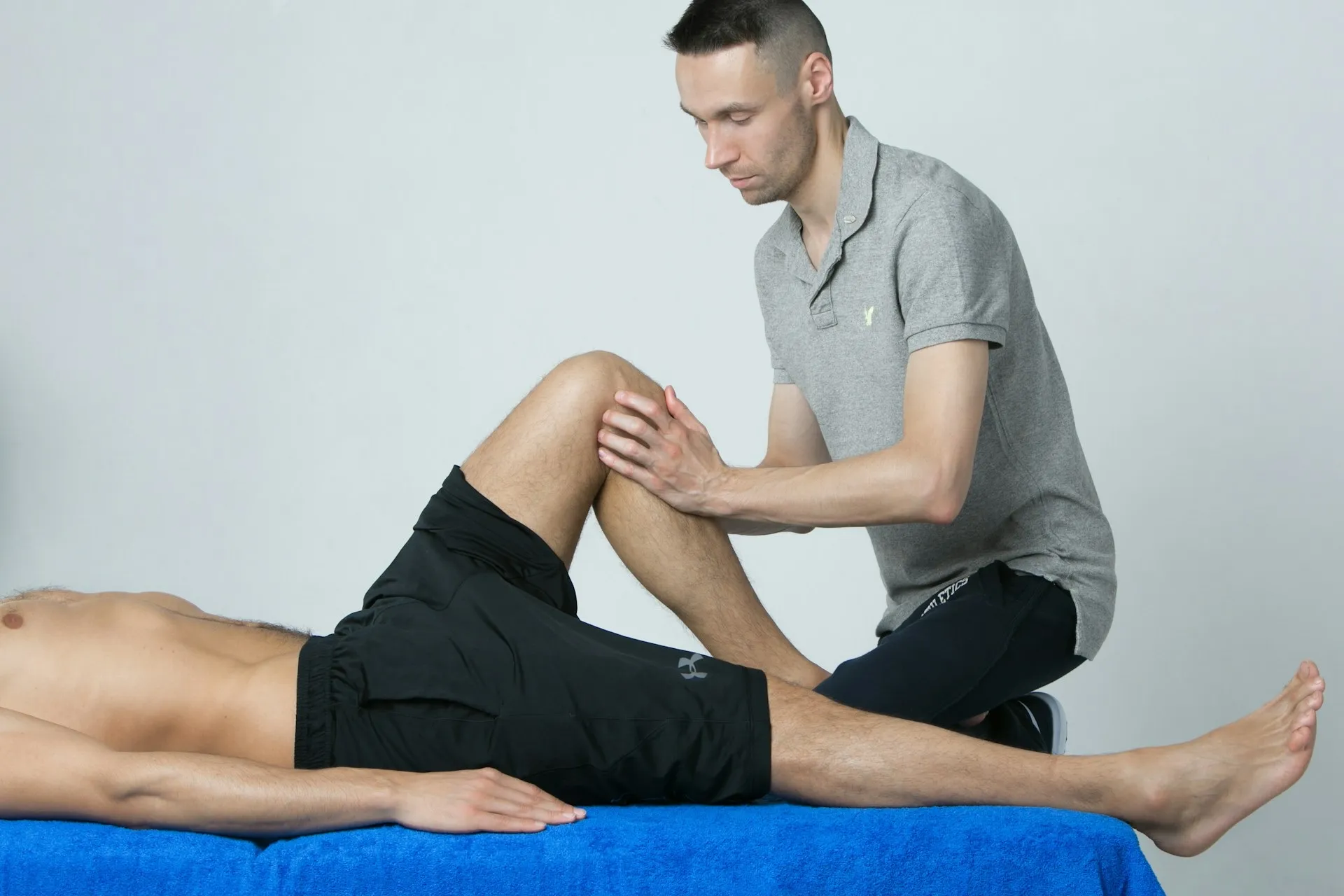
Speech therapy works over video better than most clinical work. A seven-year-old practising an /r/ sound needs to see the clinician’s mouth and hear the correction, and a webcam does both. Physical therapy is the opposite case: much of it is a therapist’s hands on a knee, and no camera replaces that. Occupational therapy sits between them.
The odd part is that licensing runs the other way. Physical therapists have one of the best-functioning interstate compacts in healthcare, with every member state issuing privileges. Speech-language pathologists, whose work suits a laptop best, have a compact enacted in 37 jurisdictions and issuing in four. The profession that could most easily go remote is the one most boxed in by state lines.
If you’re a counsellor or psychotherapist, the guide for therapists and counsellors is the one you want. This page covers the three rehabilitation professions.
Where this applies. The licensing, Medicare and pay sections are United States specific. Elsewhere registration is national, or provincial in Canada, and none of the compact machinery below exists.
Why speech therapy moves online and physical therapy mostly doesn’t
Speech-language pathology. Most sessions are listening, modelling and feedback, which is exactly what a video call carries. School teletherapy has become an industry of its own: companies such as Presence and VocoVision contract with districts that can’t hire locally, then staff those caseloads with SLPs working from home. Adult work travels too, including aphasia, voice and fluency therapy. The exception is swallowing, where instrumental assessment still needs a clinic.
Occupational therapy. Split down the middle. Handwriting, fine motor coaching with a parent at the child’s elbow, cognitive rehabilitation and home-modification consults all work on video. Splinting, hands-on sensory work, transfers and inpatient training in daily activities don’t. Most remote OT jobs are school teletherapy, where the adult sitting next to the child becomes the therapist’s hands.
Physical therapy. The hardest fit for clinical work, with one large exception: musculoskeletal care built around exercise. Digital health companies such as Hinge Health and Sword Health employ physical therapists who run video visits and message patients through an app while the patient works through a programme at home. Manual therapy, post-surgical rehab, neurological and acute care stay in the building.
Remote roles for PTs, OTs and SLPs, and what each pays
The baseline is the Bureau of Labor Statistics median for May 2025: $102,760 for physical therapists, $100,330 for occupational therapists and $97,870 for speech-language pathologists. Remote roles mostly pay by the hour, so compare the hourly figures below against roughly $47 to $49 an hour for a full clinical year.
School teletherapy, for SLPs and OTs. Usually contract work paid per hour, following the school calendar. ZipRecruiter puts SLP teletherapy at about $44 an hour on average and teletherapy OT at about $45. On a full caseload that lands close to the clinical median. Summers are unpaid unless you pick up extended school year work.
Digital musculoskeletal care, for PTs. A 2026 Hinge Health posting for a flexible-hours physical therapist advertised $30.98 to $51.37 an hour for 25 to 40 hours a week. It asked for a DPT, a licence in at least one state, two to four years of orthopaedic experience and evening availability. The bottom of that range is well under what a clinic pays. You’re trading pay for no commute and no treatment table.
Utilisation review, for all three. Insurers and managed-care companies hire therapists to decide whether requested therapy is medically necessary. Remote physical therapy utilisation review averages about $42 an hour on ZipRecruiter, and some insurers post a single role open to any of the three licences. Because you aren’t treating anyone, this is the most reliably remote job on the list. It almost always wants three or more years of clinical experience first.
Non-clinical work. Clinical documentation, continuing-education course writing and product roles at health tech companies. The jobs exist, but nobody publishes reliable pay data for them, and there are fewer openings than career-change blogs imply.
One warning for OTs: remote ergonomics gets pitched to you constantly, and ZipRecruiter’s virtual ergonomic assessment jobs average about $24 an hour. That’s technician pay for someone with a master’s degree.
Why the best compact belongs to the least remote profession
Status as of 23 September 2026, taken from each compact’s own commission site.
| Profession | Compact | Member jurisdictions | Issuing privileges | Covers assistants? |
|---|---|---|---|---|
| Physical therapists | Physical Therapy Compact | 38 | All 38 | Yes, PTAs |
| Occupational therapists | Occupational Therapy Licensure Compact | 37 | 8 | Yes, OTAs |
| Speech-language pathologists and audiologists | Audiology and Speech-Language Pathology Interstate Compact | 37 | 4 | No |
Physical therapists can use theirs today. All 38 member states issue and accept privileges, while Maine, Michigan and Rhode Island have enacted it and aren’t issuing yet. A privilege covers telehealth explicitly, and each one costs a $45 commission fee plus the state’s own fee, which is nothing in Arizona and $264 in the District of Columbia. California, Florida, New York and Minnesota aren’t members. It’s the compact that makes national physical therapy by video workable: one home licence plus privileges reaches most of the country.
Occupational therapists have eight states. Indiana, Maryland, Minnesota, Ohio, Tennessee, Virginia, West Virginia and Wisconsin accept applications, all of which opened between January and May 2026. The other 29 members show “not yet”. The commission’s home page, last updated in April, still says the compact isn’t operational, which is out of date for the eight states above.
Speech-language pathologists and audiologists have four. Louisiana, Ohio, Tennessee and West Virginia are issuing, Tennessee since May 2026. The compact’s model legislation has a section on the privilege to practise via telehealth, which makes the gap sharper: the mechanism was built for exactly the work SLPs do from home, and 33 of its members haven’t switched it on.
A privilege only works when your home state and your patient’s state are both live. An SLP licensed in Ohio can reach three other states through the compact today. Everywhere else it’s one licence per state, which is why school teletherapy postings name the states they need, and why a second or third licence is often the price of a full remote caseload.
All eight healthcare compacts are set side by side in our comparison of which licence compacts actually work.
Does Medicare still pay PTs, OTs and SLPs for telehealth?
Yes, until the end of 2027, and on a temporary basis, as it has been since 2020.
Physicians are on Medicare’s permanent list of telehealth practitioners. Physical therapists, occupational therapists and speech-language pathologists aren’t, so their authority to bill Medicare for telehealth has run on short extensions attached to spending bills. That broke twice in four months. It lapsed with the government shutdown on 1 October 2025, returned in November with retroactive payment, expired again at the end of January 2026 and was restored on 3 February.
The current extension, in the Consolidated Appropriations Act, 2026, runs through 31 December 2027. Two things improved with it. ASHA reports that the authority is no longer tied to government funding deadlines, so a shutdown shouldn’t cut it off again. And from 1 January 2026, the speech-language pathology services themselves became permanent Medicare telehealth services. What’s still temporary is the therapist’s authority to deliver them. The Expanded Telehealth Access Act, which would make it permanent, has been introduced and hasn’t passed.
What this means in practice: remote work paid by school districts, commercial insurers or employer health plans doesn’t depend on this deadline. A remote caseload of Medicare patients, which covers a lot of adult outpatient PT and post-stroke speech therapy, does. If that’s the job you’re taking, know the end date and watch whether Congress renews it.
Do PTAs, OTAs and SLPAs get the same compact access?
Physical therapist assistants and occupational therapy assistants do. Both compacts include assistants, with their own fee schedules.
Speech-language pathology assistants don’t. The compact’s own FAQ answers it in one line: “Assistants are not eligible for compact privileges.” The same rule excludes clinical fellows, and anyone else whose role requires supervision. For a new SLP graduate, that means the clinical fellowship year happens under a single state’s rules, and the compact only becomes useful after it.
Assistants in all three professions also face state rules on how they’re supervised, and some states restrict supervision at a distance. Check yours before taking a remote assistant role, because the employer’s compliance team will.
What PT, OT and speech therapists lose working through a screen
Your hands as an assessment tool. For physical therapy and a lot of OT, touch is how you find things out: the end-feel of a joint, muscle tone, how a patient braces before a movement hurts. On video you watch and ask. You’ll miss things you would have felt.
Control of the other side of the room. Paediatric teletherapy depends on a parent or aide doing what you’d do with your own hands, and that adult changes from session to session. A good one makes the session. A distracted one ends it.
Normal hours, sometimes. The Hinge posting above wanted evenings, because that’s when patients with day jobs do their exercises. School teletherapy follows the academic calendar, including the unpaid summer.
Colleagues in the next room. Rehab clinics run on corridor consults. Working from home, you have to build that deliberately, and the boundaries that hold when work and home share a room take more effort than they sound.
Which of PT, OT and speech therapy is best placed to go remote?
Speech-language pathologists, by a distance. School teletherapy has real volume and pays close to the clinical median. Your licensing strategy is the whole game: hold licences in the states where the teletherapy companies need staff, and treat the compact as a bonus when your states come online.
Occupational therapists should plan for hybrid. School teletherapy and utilisation review are the realistic remote roles. Most adult and inpatient OT will stay in person, and remote ergonomics pays too little to build a career on.
Physical therapists have the licence and not the job. Your compact works, so digital musculoskeletal companies can hire you almost anywhere, but those roles pay below clinic rates at the low end. Utilisation review is the other route out of the clinic, usually after a few years in one.
Everyone needs clinical years first. Every remote posting researched for this article asked for experience, from two years at Hinge to three or more in utilisation review. Remote work in these professions is where you go after the clinic, not instead of it.
For the job search itself, general sites bury these roles. The best remote job boards are worth running alongside healthcare-specific boards that filter by licence. And if you’re weighing this against other professions, what decides whether a job can be done from home sets out the four constraints that recur across all of them.
Sources
The bodies below are the primary sources for the licensing and Medicare claims above. The compacts are mid-implementation and their numbers move, so check them directly rather than trusting any article’s snapshot, including this one. Checked 23 September 2026.
- Physical Therapy Compact member states: physical therapists and PTAs, with issuing and enacted states listed separately
- Occupational Therapy Licensure Compact, before you apply: occupational therapists and OTAs, with the date each state opened
- Audiology and Speech-Language Pathology Interstate Compact: speech-language pathologists and audiologists
- CMS therapy services: the Medicare telehealth extension through 31 December 2027
- American Speech-Language-Hearing Association on Medicare telehealth: which services are permanent and which authority is still temporary
- Bureau of Labor Statistics Occupational Outlook Handbook: median pay for all three professions
Pay figures come from job aggregators and individual postings, linked inline where they appear. They move continuously and are a snapshot, not a benchmark.